
Can a Boat Lift Motor Be Repaired or Should It Be Replaced? - A Complete Guide
When a boat lift motor stops working properly, many boat owners immediately ask the same question: should the motor be repaired, or is it better to replace it?
While certain minor issues can sometimes be repaired, in many cases replacing the boat lift motor is the more reliable and safer long-term solution. Boat lift motors operate in harsh marine environments and are responsible for lifting thousands of pounds. Once internal components begin to wear out, repairs may only provide temporary relief.
Understanding how boat lift motors fail, when repairs may be possible, and why replacement is often the better option can help you make an informed decision that protects both your lift system and your boat.
How Boat Lift Motors Work
Most residential boat lifts use electric AC motors, typically operating on 110V or 220V power. These motors drive a gear system or rotate a shaft that winds cables or turns a drive pipe, allowing the lift to raise and lower your boat.
Because these motors perform heavy lifting and operate outdoors, they are constantly exposed to challenging conditions such as:
Moisture and humidity
Rain and storms
Salt air in coastal environments
Heavy lifting loads
Frequent use throughout boating season
Even motors designed specifically for marine environments eventually experience wear and deterioration over time.
Common Causes of Boat Lift Motor Failure
Boat lift motors can fail for several reasons, many of which are related to environmental exposure and long-term mechanical wear.
Corrosion
Corrosion is one of the most common causes of motor failure. Salt air and humidity can cause rust to develop inside the motor housing, eventually damaging internal electrical components and bearings.
Electrical Component Failure
Electrical components such as capacitors, switches, and wiring may fail after years of operation. In some cases, internal windings inside the motor can burn out due to overheating or electrical surges.
Water Intrusion
Storms, flooding, or damaged seals can allow water to enter the motor housing. Once moisture reaches internal components, corrosion and electrical issues can develop quickly.
Mechanical Wear
Boat lift motors routinely lift thousands of pounds. Over time, internal parts such as bearings and gears may wear down, especially on lifts that are used frequently.
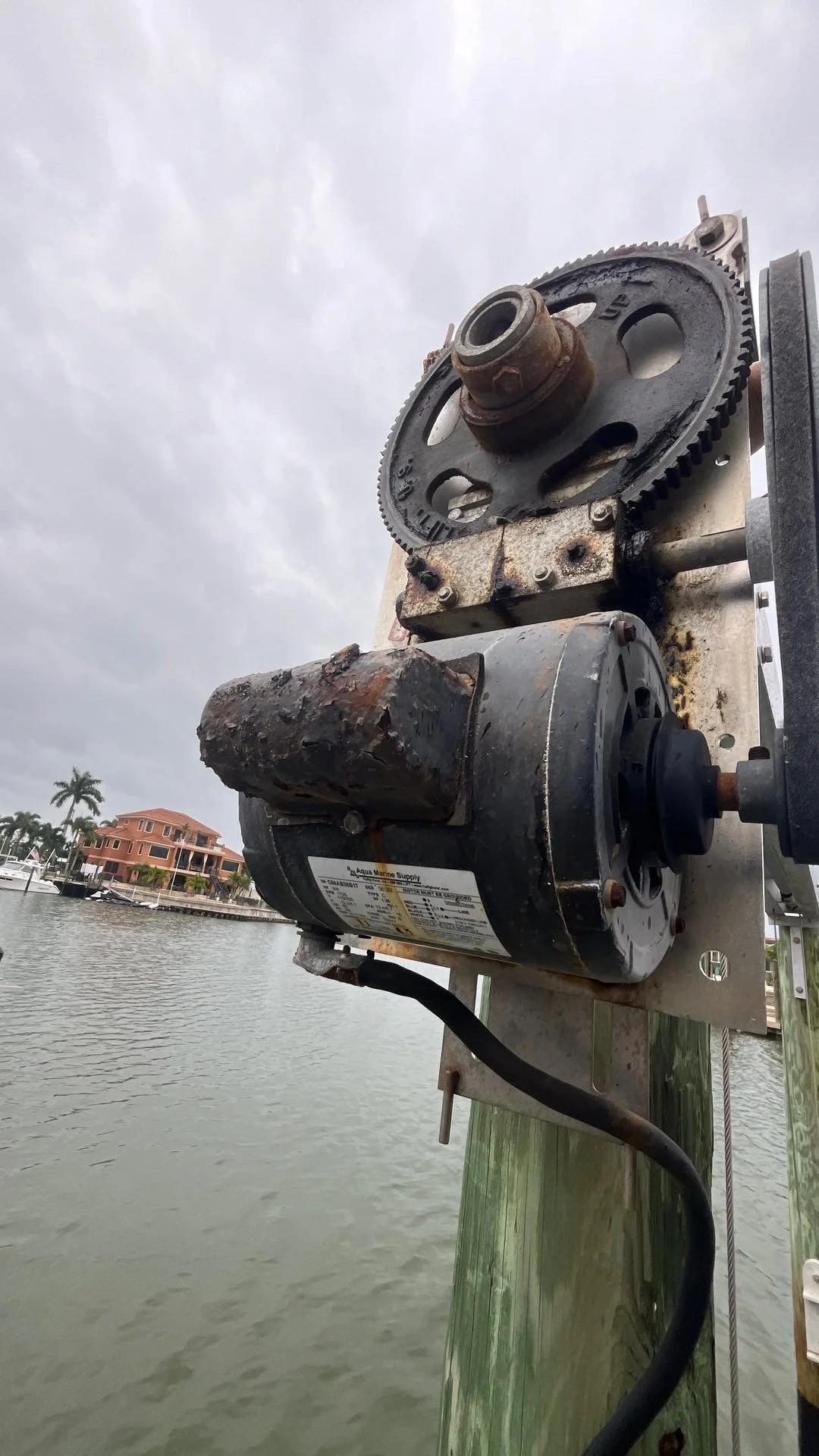
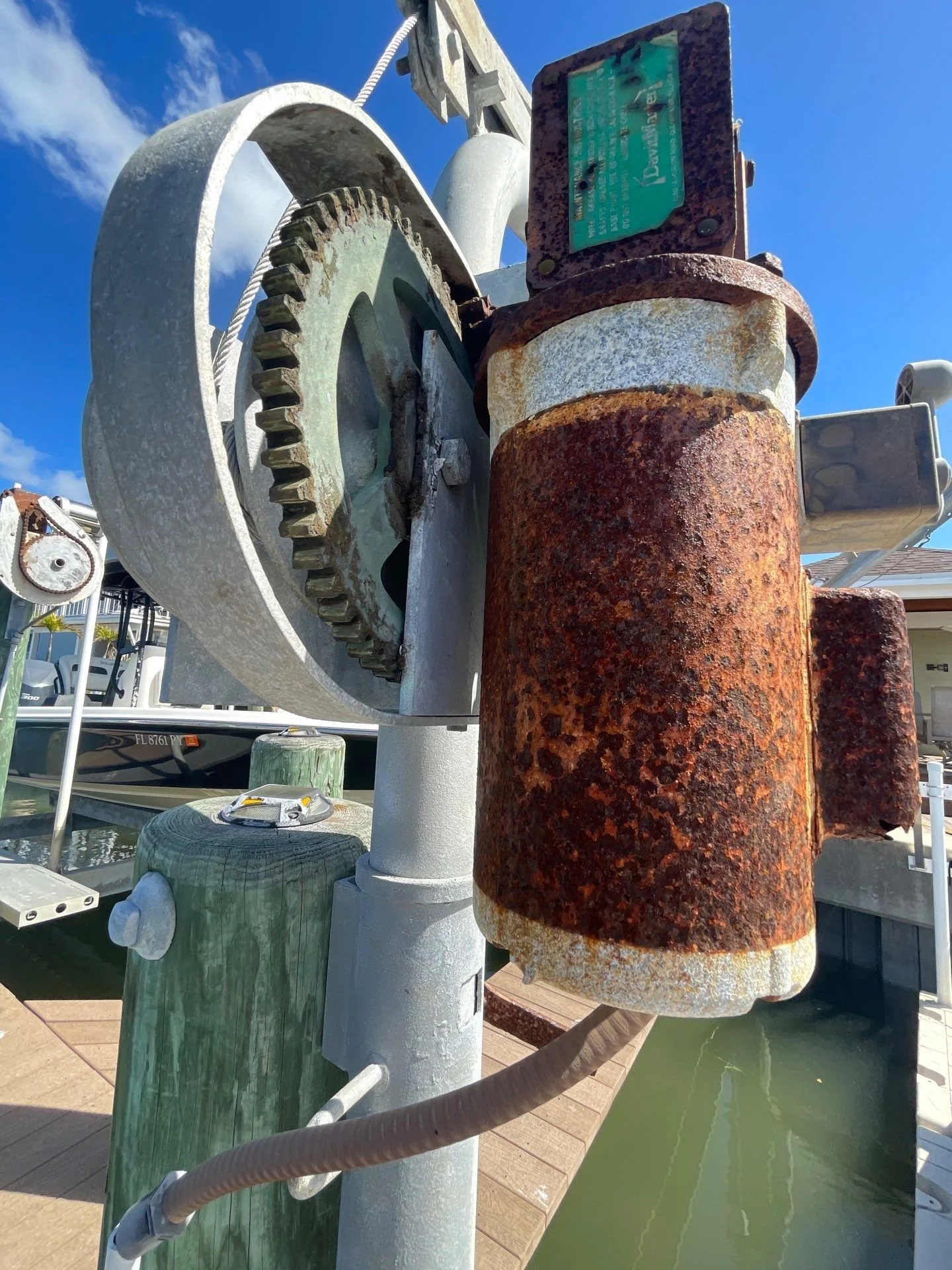
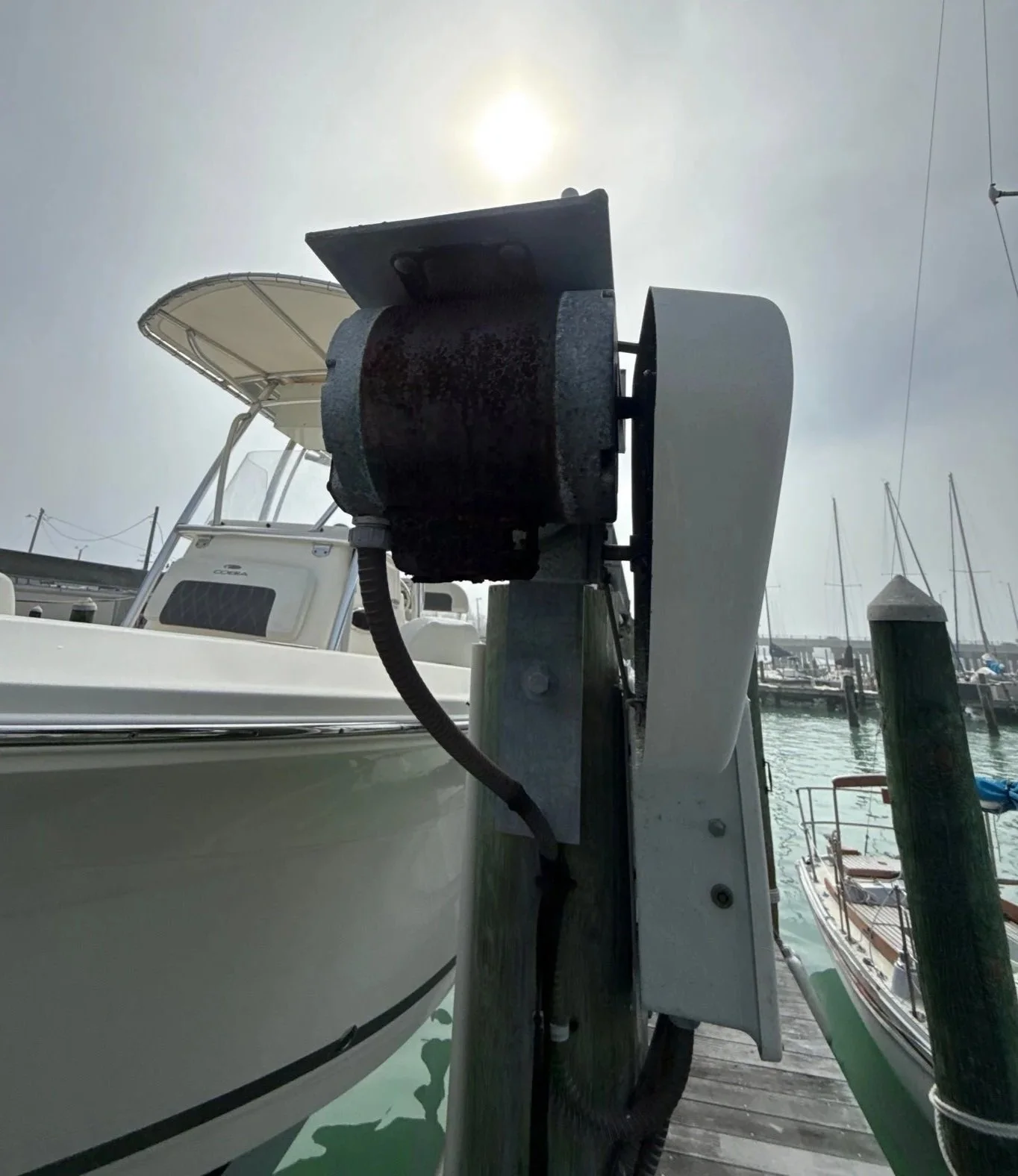
When Boat Lift Motor Repairs May Be Possible
In some situations, boat lift motor repairs may restore basic functionality. For example, minor issues such as a faulty capacitor or damaged wiring can sometimes be repaired if the motor is relatively new and the problem is isolated.
Repairs may occasionally make sense if:
The motor is relatively new
The issue is limited to a single component
There is no internal corrosion
The repair cost is significantly lower than replacement
However, even when a repair is technically possible, it does not always address underlying wear inside the motor. Internal components may already be deteriorating, which can lead to additional failures in the near future.
Because of these reliability concerns, our company focuses on boat lift motor replacement rather than motor repairs. In many situations, the motors we offer are priced competitively enough that replacing the motor is often more cost-effective than attempting a repair—especially when labor and diagnostic costs are considered.
Installing a new boat lift motor can eliminate recurring issues, restore dependable lift operation, and provide the added benefit of updated components and manufacturer warranty protection.
Safety Concerns When Repairing Boat Lift Motors
Boat lift motors operate using high electrical power while supporting heavy loads, which means improper repairs can introduce safety risks.
Electrical Hazards
Boat lift motors typically run on 110V or 220V electrical systems, often located close to water. Improper repairs or damaged wiring can increase the risk of electrical shock.
Water Exposure
Boat lifts are constantly exposed to moisture and humidity. If a motor housing is not properly sealed after repairs, water may enter the system and cause electrical shorts or further damage.
Mechanical Load Risks
Boat lifts support significant weight. If a repaired motor does not operate at full strength, it may struggle to lift the boat safely or place additional stress on the lift system.
Overheating and Fire Risk
Motors with internal electrical damage may overheat during operation. If repairs fail to resolve underlying issues, excessive heat can damage wiring or create potential fire hazards.
Because of these safety concerns, repairing heavily worn or damaged motors is not always the most reliable solution.
Why Boat Lift Motor Replacement Is Often the Better Option
In many situations, replacing the motor provides greater reliability and long-term value than attempting repairs.
Greater Reliability - A new motor eliminates the uncertainty associated with aging components and previous damage. Instead of dealing with recurring issues, replacement provides a dependable system designed for consistent operation.
Improved Performance - New motors often operate more smoothly and efficiently than older units. Many boat owners notice faster lifting speeds and quieter operation after installing a new motor.
Reduced Maintenance - Older motors that require repair may continue developing problems over time. Replacing the motor can significantly reduce the need for ongoing service and maintenance.
Better Protection for Your Boat - A reliable motor helps ensure the lift raises and lowers safely, reducing the risk of damage to your boat.
Warranty Protection - One of the biggest advantages of replacement is manufacturer warranty coverage.
Most new boat lift motors include warranties that protect against certain defects or early failures. This additional protection offers peace of mind that repairs typically cannot provide.
Cost Comparison: Repair vs Replacement
Cost is often one of the most important factors when deciding whether to repair or replace a boat lift motor.
Repairs may include:
Diagnostic service visits
Labor costs
Replacement parts
Additional service calls if problems return
These expenses can quickly add up, especially if the motor continues to develop issues.
Replacing the motor provides a fresh lifespan, improved performance, and warranty coverage, making it a more predictable long-term investment.
When repair costs approach the price of a new motor, replacement usually becomes the better value.
5 Signs It’s Time to Replace Your Boat Lift Motor
In many cases, a failing motor will show clear warning signs before completely stopping.
1. The Motor Will Not Start
If the motor fails to respond when activated, internal electrical damage may be present.
2. The Lift Struggles to Raise the Boat
A weakening motor may lose lifting power, causing slower or incomplete lifting.
3. Frequent Overheating
Motors that overheat during operation may have internal electrical problems or worn components.
4. Unusual Noises
Grinding, humming, or clicking sounds often indicate internal mechanical wear.
5. Repeated Repairs
If the motor has required multiple repairs, replacing it may be the more practical long-term solution.
How Long Do Boat Lift Motors Typically Last?
The lifespan of a boat lift motor depends on several factors, including usage, environment, and maintenance.
Most boat lift motors last between 5 and 15 years when properly cared for.
Motors installed in saltwater environments may wear out sooner due to corrosion and constant exposure to humid air.
If your motor is approaching this age range and beginning to show signs of failure, replacement is often the safest option.
Environmental Factors
The environment where a boat lift motor operates has a major impact on its lifespan. Conditions such as saltwater exposure, humidity, extreme temperatures, and corrosive elements can accelerate wear and damage internal components.
To protect motors from these conditions, manufacturers often use corrosion-resistant materials and sealed motor housings designed for marine environments.
Even with these protections, environmental exposure can gradually affect performance over time, which is why regular inspection and maintenance are important for extending the life of the motor.
Usage Frequency
How often a boat lift motor is used can also affect how quickly it wears out.
Motors that operate multiple times per day experience more mechanical strain than those used occasionally. However, lifts that are used less frequently still require routine maintenance.
Regular upkeep helps prevent problems such as:
Corrosion from moisture buildup
Stiff or seized components
Loose electrical connections
Dirt and debris buildup
Simple maintenance tasks like lubricating moving parts, inspecting components, and cleaning the motor area can help keep the system operating smoothly.
Motor Quality
The quality of the motor itself is another major factor in how long it will last.
High-quality boat lift motors are built using durable materials and stronger internal components that are better suited to marine conditions. Choosing a motor from a reputable manufacturer helps ensure the motor meets higher standards for reliability and performance.
Investing in a well-built motor can significantly reduce the likelihood of early failure and provide dependable operation for many years.
Maintenance Practices
Routine maintenance is one of the most important ways to extend the life of a boat lift motor.
Regular inspections, lubrication, and cleaning help identify small issues before they turn into major problems. Addressing minor wear early can prevent more costly repairs or unexpected motor failure.
Following the manufacturer’s recommended maintenance guidelines is essential for keeping the motor operating efficiently.
Many manufacturers, such as BH-USA, provide detailed maintenance instructions that help boat owners properly care for their equipment and keep their lift motors running smoothly.
Final Thoughts
Boat lift motors are built to withstand marine environments, but years of heavy use, moisture, and corrosion eventually take their toll.
While some minor problems may be repairable, repairs often become temporary solutions—especially for older motors. In many situations, replacing the motor provides greater reliability, improved performance, increased safety, and valuable warranty protection.
If your boat lift motor is no longer operating properly, replacing it with a reliable new unit can restore safe and efficient lift operation.
You can view our available boat lift motors here.
