
Boat Lift Capacity Guide: What Size Do You Really Need?
Selecting the right boat lift capacity is one of the most important steps in protecting your vessel. A properly sized lift prevents unnecessary strain on the system, reduces long-term wear, and ensures your boat is stored securely above the waterline. Choosing the wrong capacity — even by a small margin — can lead to cable damage, bent beams, or complete lift failure.
Here’s a clear, straightforward guide to calculating the correct lift capacity for your boat and avoiding common sizing mistakes.
Why Boat Lift Capacity Matters
Every lift is designed to support a specific maximum weight. When your boat exceeds that rating, even occasionally, it puts the entire system at risk. Operating too close to the limit every day can also shorten the lifespan of:
Cables
Motors
Pulleys
Bunks
Structural beams
On the other hand, choosing an unnecessarily oversized lift increases installation costs without offering additional protection.
The key is to find the accurate weight of your boat — not just the number listed by the manufacturer.
Step 1: Start With the Boat’s Dry Weight
Your boat’s dry weight is the number listed by the manufacturer before fuel, fluids, passengers, batteries, or gear are added. You can usually find this:
In your owner’s manual
On the manufacturer’s website
In your boat’s registration documents
This is your baseline — but it is nowhere near your boat’s true operating weight.
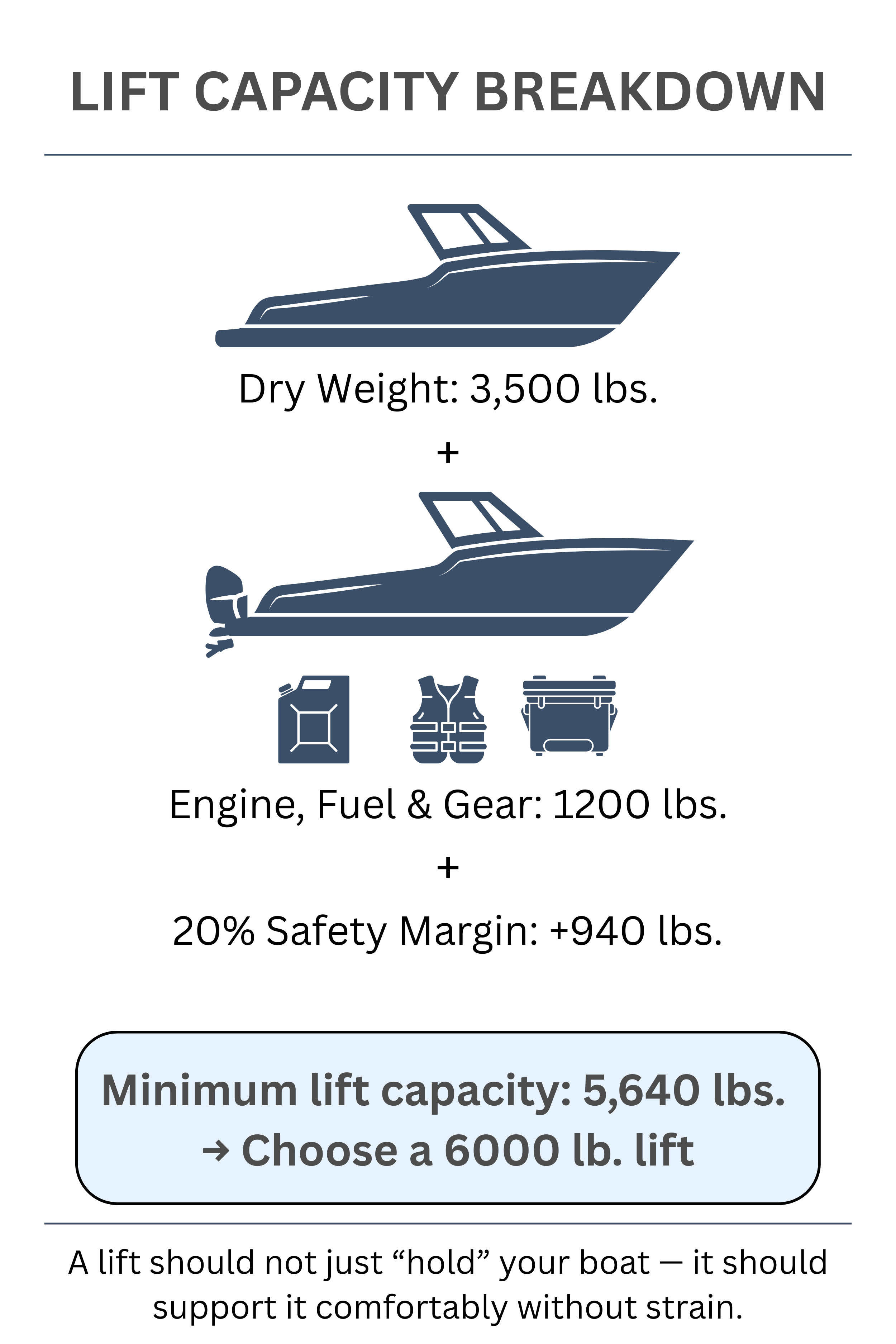
Step 2: Add Fuel, Water, Gear & Accessories
A boat rarely sits on the lift “empty.” All everyday items add measurable weight, and forgetting them is one of the biggest mistakes homeowners make.
Fuel - Gasoline weighs 6–6.3 lbs. per gallon. A 60-gallon tank adds roughly 375–380 lbs..
Water - Freshwater, ballast, and livewells add 8.3 lbs. per gallon, which can total several hundred pounds.
Batteries & Gear - Include items such as:
Batteries
Anchors
Coolers
Tools
Safety gear
Fishing equipment
Electronics
Aftermarket Add-Ons - Upgrades like T-tops, towers, seating, speakers, lighting, and brackets can significantly increase total weight.
Add these numbers together to get your true operating weight — the weight your lift must actually support.
Step 3: Add a 10-20% Safety Margin
Once you calculate your operating weight, add 20–25%.
This extra capacity accounts for:
Weight loading differences
Gear you may add in the future
Day-to-day strain on the lift
Miscalculations in estimated weight
Long-term cable and motor performance
Common Mistakes When Choosing Lift Capacity
1. Forgetting to Include Fuel, Water & Gear
These items can add 300–1,000+ lbs and dramatically affect capacity requirements.
2. Not Adding a Safety Margin
Choosing a lift equal to your operating weight is unsafe and leads to premature wear.
3. Underestimating Add-Ons
T-tops, hardtops, towers, speakers, and aftermarket accessories all add weight owners often don’t consider.
4. Assuming All Boats of the Same Model Weigh the Same
Previous owners may have added equipment or modifications that change the weight significantly.
5. Choosing a Lift Based Only on Price
A cheaper lift with lower capacity may cost more in repairs or replacement later.
Future-Proofing Your Lift (Without Oversizing)
While it’s important not to oversize a lift excessively, it is smart to consider near-future changes. If you know you may upgrade to a slightly heavier boat, choosing the next capacity tier can save money long-term.
However, installing a lift drastically larger than needed may require bigger beams, pilings, or electrical components — increasing cost without offering meaningful protection.
Choose the next realistic size up, not the biggest size available.
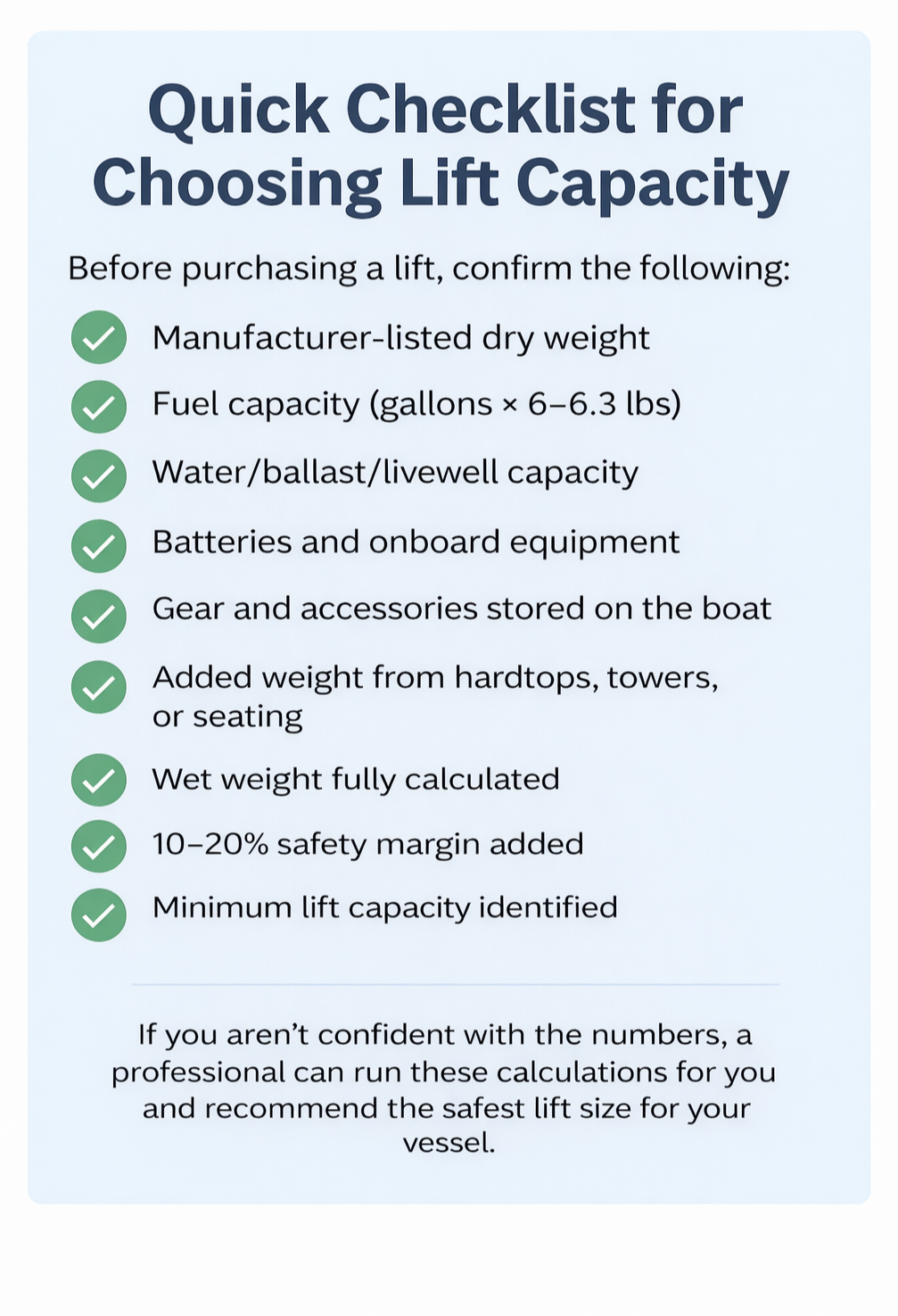
Need Help Choosing a Boat Lift?
As Tampa Bay’s trusted owner-operated boat lift specialists, we’re here to help you select the right equipment for your vessel. Whether you’re installing a new lift or upgrading an old one, our team has the experience to guide you every step of the way.
Have questions? Contact us for a free consultation or request a quote today.
